
# Offshore Call Center Customer Consent Record: Preserving What Was Agreed
**August 21, 2026**
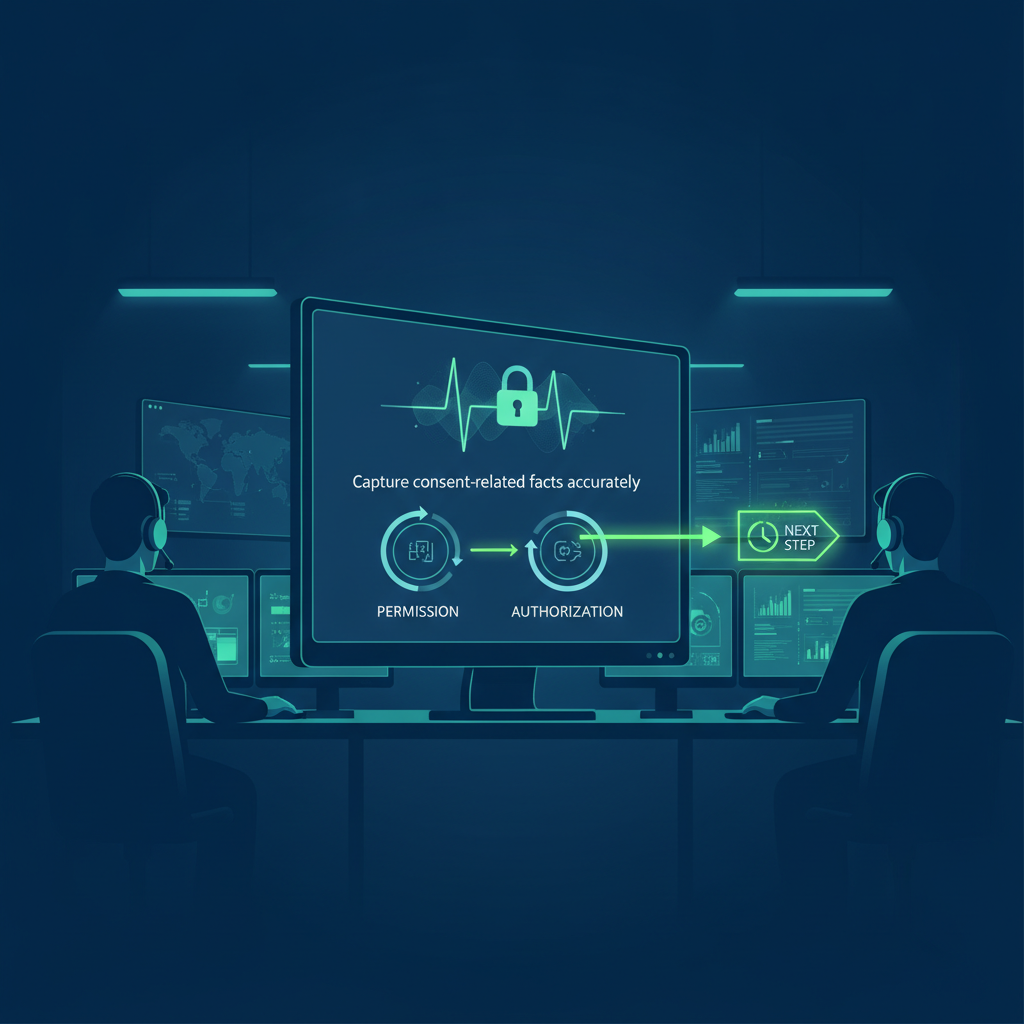
In the dynamic landscape of offshore call center operations, accurately capturing and meticulously preserving customer consent is not merely a procedural step; it's a foundational pillar for trust, operational integrity, and responsible service delivery. Every interaction, whether it’s setting an appointment, initiating a service change, or confirming a payment, hinges on a clear understanding and explicit agreement with the customer. This article delves into the practicalities of managing customer consent records within an offshore context, emphasizing the critical distinction between permission and authorization, and outlining actionable steps to ensure what was agreed is precisely what is preserved.
The Core Distinction: Permission, Authorization, and the Customer's Voice
At the heart of any customer interaction is the concept of consent. It's crucial to understand that *consent* from a customer is their explicit *permission* for a specific action or use of their information. This permission then grants the offshore call center the *authorization* to proceed with that action. Without the customer’s explicit permission, any subsequent action, even if seemingly innocuous, operates without proper authorization, potentially leading to misunderstandings, service errors, or eroded customer confidence.
Consider a common scenario: an offshore agent is assisting a customer with a complex technical issue requiring remote access to their device. The customer’s verbal "Yes, you can access my computer" is their *permission*. This permission *authorizes* the agent to initiate the remote connection tool. Without this explicit verbal agreement, the agent, despite having the technical capability, would lack the authorization to proceed.
For offshore teams, this distinction is particularly salient. Nuances in language, accent, and cultural communication styles can inadvertently obscure clear expressions of permission. Therefore, the onus is on the offshore operation to proactively design communication flows and record-keeping practices that leave no ambiguity, ensuring the customer's permission is unequivocally captured before any action is authorized. Failure to secure unambiguous permission before proceeding is a critical failure mode that can lead to customer dissatisfaction and the need for costly rework.
Engineering Consent Capture: Methods for Offshore Environments
Effectively capturing consent requires systematic processes tailored to the specific communication channel and the distributed nature of offshore teams. The goal is to obtain clear, affirmative statements from the customer and link these directly to the specific action or agreement.
For **voice interactions**, which form the backbone of many offshore centers, direct, unambiguous scripting is paramount. An agent should clearly state what is being agreed to and solicit an explicit "yes" or "I agree." For example, when confirming an appointment, the agent might say: "To confirm, we will schedule your service technician for Tuesday, October 15th, at 10:00 AM, and you agree to this time. Is that correct?" The customer's "Yes, that's correct" is the permission. The entire call recording serves as the primary evidence. Beyond the recording, the agent should log a concise summary in the Customer Relationship Management (CRM) system, noting the date, time, agent ID, and a brief description of the agreed-upon item (e.g., "Customer confirmed appointment for 10/15, 10 AM EST").
In **chat or email interactions**, the written nature provides an inherent record. However, clarity is still essential. Agents should use specific questions to elicit consent, such as: "Do you agree to proceed with the service upgrade to the Premium plan?" or "Please confirm by typing 'I agree' if you wish to update your shipping address to [New Address]." The full chat transcript or email chain serves as the consent record, alongside a linked entry in the CRM.
**Practical Decisions:**
* **Verbatim Capture:** Where possible, record the exact words used by the customer to grant permission. * **Affirmative Confirmation:** Always seek a clear "yes," "I agree," or equivalent, rather than inferring consent from silence or a lack of objection. * **Time-stamping:** Every captured consent must be precisely time-stamped to establish its context within the interaction. * **Agent Role:** Agents are responsible for clearly presenting the terms requiring consent and confirming understanding. They must be trained to recognize and address any hesitation or ambiguity from the customer. * **Evidence to Retain:** * Full call recording reference (if applicable). * Full chat transcript or email chain. * Date, time, and timezone of consent capture. * Agent ID. * Customer identifier. * Specific service/action consented to. * A unique consent record ID for easy retrieval.
Navigating Context: Consent Records Across Handoffs and Escalations
One of the significant challenges in offshore operations, particularly with distributed teams and tiered support, is ensuring the context of consent is not lost during handoffs or escalations. When a customer interaction moves from a Level 1 support agent to a specialist, or from the support team to a billing department, the preceding consent records must be seamlessly transferred to avoid frustrating the customer by asking for the same permissions again or, worse, taking unauthorized actions.
Consider a customer who initially contacted an offshore L1 agent to authorize a one-time payment for an overdue bill. If the payment fails and the issue escalates to a billing specialist, that specialist needs immediate access to the record of the customer's permission to process the payment. Without it, the specialist might inadvertently try to re-process the payment without re-confirming, or conversely, waste time re-eliciting consent already given.
**Practical Decisions for Handoffs:**
* **Structured CRM Notes:** Implement mandatory fields in the CRM for agents to summarize explicit permissions granted, with direct links to the relevant interaction records (e.g., "Consent to process one-time payment given on 08/21/2026 at 14:30 UTC. See call recording ID XXXXX."). * **Unique Consent Identifiers:** Assign a unique ID to each specific consent record. This allows any subsequent agent or department to quickly locate and reference the original permission. * **Internal Handoff Protocols:** Establish clear protocols for agents when transferring calls or cases. This should include verbally summarizing key consents to the receiving party, especially if the subsequent action depends on previous permission. * **Role Boundaries:** The transferring agent is responsible for documenting consent thoroughly. The receiving agent is responsible for reviewing the consent record before proceeding. Failure to adequately document or review can lead to the failure mode of operating without updated or valid authorization.
Integrity and Access: Protecting the Consent Record
Preserving consent records extends beyond mere capture; it encompasses their integrity, accessibility, and security. An accurate consent record is only valuable if it remains unaltered and is retrievable when needed.
**Quality Assurance (QA):** QA teams play a vital role in validating consent capture. During routine call or chat reviews, QA analysts should specifically evaluate: * Was explicit permission obtained for all actions requiring it? * Was the permission unambiguous? * Was the consent accurately documented in the CRM? * Did the agent verify customer understanding of what they were consenting to? QA feedback loops should identify common pitfalls, such as agents inferring consent or failing to document it correctly, and drive targeted training for offshore teams.
**Access Controls:** Not everyone in the organization needs full access to modify consent records. Implement robust role-based access controls within CRMs and recording systems: * **Agents:** Typically have read-only access to existing consent records for context, and write access to log new consent for their interactions. * **Supervisors/Managers:** May have limited modification rights for exceptional circumstances, with audit trails of all changes. * **QA Analysts:** Read-only access for review purposes. * **IT/System Administrators:** Manage system access, but generally do not modify individual consent records. Failure to implement granular access controls can lead to unauthorized modifications or deletions of consent records, undermining their reliability as evidence.
**Evidence to Retain:** Maintain an immutable audit trail of who accessed or modified a consent record, when, and what changes were made. This log is crucial for demonstrating the integrity of the record over time.
Building a Resilient Consent Framework: A Measured Implementation Path
Establishing a robust system for managing customer consent in an offshore call center is an ongoing journey, not a one-time project. A measured, phased approach allows for adaptation, refinement, and effective training.
1. **Pilot Program & Policy Definition:** * Begin by defining clear, concise consent policies and procedures. These should specify what constitutes valid consent for different interaction types (e.g., remote access, account changes, marketing preferences). * Roll out these new procedures with a small pilot team within the offshore center. This allows for real-world testing and identification of initial friction points without impacting the entire operation.
2. **Comprehensive Agent Training:** * Develop detailed training modules that cover the "why" and "how" of consent capture. Focus on practical scenarios, scripting examples, and handling ambiguous customer responses. * Emphasize the distinction between permission and authorization, ensuring agents understand their role in eliciting permission. * Utilize role-playing and mock calls to build agent confidence and proficiency.
3. **Technology Integration & Workflow Enhancement:** * Work with IT to configure CRM systems to include mandatory fields for consent capture, linking directly to recordings or transcripts. * Explore integrations that automatically log consent details from interaction recordings (e.g., keyword detection, though always backed by human review). * Streamline workflows to ensure consent context seamlessly flows with case transfers and escalations.
4. **Continuous Monitoring and Feedback:** * Integrate consent capture as a core metric in QA scorecards. Regularly review interactions specifically for adherence to consent protocols. * Establish regular feedback loops from QA to agents and training teams. * Conduct periodic audits of consent records to ensure their accuracy and integrity. This continuous improvement cycle is essential for adapting to evolving customer expectations and operational requirements.
By meticulously capturing, documenting, and protecting customer consent records, offshore call centers do more than just follow best practices; they reinforce their commitment to transparency, build stronger customer relationships, and establish a clear, documented history of what was truly agreed upon. This disciplined approach is an investment in both operational excellence and enduring customer trust.